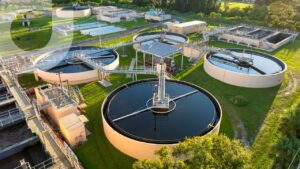
The world’s next wave of water infrastructure will not be built by engineers alone. It will be built by lawyers. Behind every desalination plant, wastewater-reuse network, or basin-level partnership lies a web of contracts that determine how risk, value, and accountability flow.
For those of us who lead global water companies, legal craftsmanship has become as essential as technical excellence. The contracts we sign are not just documents: they are the operating system of cooperation between public authorities, financiers, and private operators. Yet the complexity of this operating system is increasing faster than our collective ability to manage it.
This article is not a primer on legal instruments. It is rather an invitation to the legal community to see the frontier we are crossing together: one where climate uncertainty, blended finance, and public trust are redefining the legal architecture of water.
The New Scale of Complexity
The modern water project sits at the intersection of multiple domains: infrastructure, environment, finance, and digital technology. Each adds a layer of contractual sophistication.
A 100-million-euro wastewater-reuse plant, for instance, may combine:
- A design-build-operate (DBO) contract for civil and electromechanical works.
- A long-term off-take agreement with a municipality.
- A sovereign or multilateral guarantee covering political or foreign-exchange risk.
- Performance-based metrics tied to water quality, carbon intensity, and energy use.
- Digital-data clauses covering real-time monitoring, cybersecurity, and AI-driven optimization.
The legal ecosystem needed to align these moving parts resembles a constellation, not a linear chain. Yet many jurisdictions still rely on templates designed for conventional infrastructure, not adaptive, multi-party systems. For law firms, this mismatch creates both a challenge and a market: the need to translate physical water flows into contractual architectures that can survive decades of technological and regulatory change.
The Geography of Risk
Water is local; finance is global. That dissonance is the first source of tension between operators and lawyers.
For an international water company, a project in Morocco, India, or Chile may involve 15 to 20 different risk domains: hydrological variability, regulatory change, currency exposure, tariff adjustments, and social-license conditions. These are not abstract: they determine whether a 25-year concession yields a stable return or collapses under political pressure.
Legal practices that accompany us into such markets face the challenge of crafting instruments that can accommodate both local unpredictability and international enforceability. The traditional model of transferring risk down the contractual chain no longer works. Water assets operate in communities; they are visible, political, and essential. Excessive risk-shifting undermines sustainability.
What we increasingly need (and what legal innovation can deliver) are shared-risk frameworks: adaptive contracts that align incentives between public and private actors, with transparent adjustment mechanisms for droughts, energy shocks, or regulatory reform.
This requires not only legal drafting but also trust engineering: embedding mechanisms of disclosure, mediation, and joint performance review that keep collaboration viable long after financial close.
Time as a Legal Variable
In water, time is risk. Infrastructure designed for 30 years must operate in a regulatory and climatic context that will change five times before the asset matures.
Lawyers working with water companies know how often we return to the table to renegotiate; not because of failure, but because the world changed around the contract. Climate volatility, new environmental standards, or even technological leaps (such as energy-neutral desalination or real-time digital twins) alter the economics of the original deal.
Static legal instruments cannot accommodate dynamic ecosystems. The real frontier is contracts that evolve: incorporating step-in rights, performance corridors, and periodic review clauses triggered by objective metrics rather than political negotiation.
The legal profession is uniquely positioned to design such adaptive structures. But that means breaking with precedent: moving from the idea of a contract as a fixed equilibrium to one as a governance process. The water sector can be a testing ground for that evolution.
Financing the Unbankable
Every water executive has faced the same paradox: the projects that most need investment are often the hardest to finance. They are fragmented, local, and perceived as “non-bankable.”
Legal innovation can bridge that gap. Structuring blended-finance instruments, escrow arrangements, and outcome-based contracts requires precision that only multidisciplinary legal teams can provide. Yet the market for such services is still thin.
One obstacle is the tension between standardization and customization. Lenders want predictable terms; local authorities want context-specific safeguards. Lawyers sit at the fault line between these demands. Too much standardization, and the project loses legitimacy; too much customization, and it loses bankability.
The solution lies in modular design: legal templates with adjustable parameters, pre-approved by financiers yet open to local adaptation. Some development banks are already working on such frameworks. But for this to scale, law firms must engage earlier, during the structuring of the deal, not merely during its execution.
For our industry, early legal engagement is no longer a cost: it is a form of risk insurance.
The New Language of Performance
Performance used to mean cubic meters delivered or treatment levels achieved. Today it also includes carbon emissions, energy use, circular-economy metrics, and social inclusion.
Embedding these multi-dimensional outcomes in a contract is an art form. For lawyers, the challenge is to translate sustainability into enforceable language. For companies, it is to commit to measurable results without paralyzing innovation.
We are learning that overly rigid key performance indicators can backfire, discouraging adaptive management. What works better are tiered performance bands: clear minimums, ambitious targets, and incentives for over-achievement.
The legal sector plays a decisive role here: drafting performance frameworks that are auditable yet flexible, detailed yet comprehensible to non-lawyers. In this respect, the best contracts are not adversarial documents; they are shared roadmaps of accountability.
Data, Digitalization, and the Law
As water systems go digital, the contractual terrain expands into data ownership, privacy, cybersecurity, and AI governance. For water companies, data is both asset and liability. For law firms, it is a new practice area that did not exist a decade ago. The question is no longer who builds the infrastructure, but who controls the intelligence it produces.
We need legal expertise that can define:
- Which data belongs to the operator, which to the public authority, and which to the consumer.
- How predictive algorithms are audited for bias or accuracy.
- How cybersecurity obligations are shared among contractors.
Data clauses are now as critical as tariff clauses. They determine the transparency, resilience, and even ethics of the project. In this sense, lawyers are becoming the custodians of digital integrity in the water sector.
Dispute Prevention, Not Just Adjudication
The complexity of water contracts makes dispute avoidance as valuable as arbitration. Many international projects fail not because of legal ambiguity but because of erosion of trust.
Progressive legal teams are embedding “collaborative governance” mechanisms (standing committees, neutral technical experts, early-warning protocols) into contracts. These create channels for course correction before differences escalate.
In a sector where delays can cost millions and reputations can erode overnight, preventive lawyering is the next frontier. The goal is not to eliminate conflict but to institutionalize dialogue.
The Ethics of Partnership
Beyond structure and performance lies a deeper question: who benefits from the legal design?
Water companies operate under public scrutiny. Our legitimacy depends on fairness: on tariffs that reflect value but remain affordable, on procurement that is competitive yet inclusive, on risk allocation that does not externalize vulnerability onto communities.
For law firms advising us, this ethical dimension is becoming central. The ability to frame contracts that uphold transparency, equity, and long-term stewardship is no longer reputational; it is strategic. Regulators and investors alike are beginning to evaluate not just what we build, but how our contracts embody responsibility.
Building a Shared Culture of Foresight
What the water industry and the legal profession share is exposure to time: both must think decades ahead. A desalination plant or wastewater system conceived today must withstand regulatory, climatic, and financial shifts for a generation.
We therefore need a joint culture of foresight: continuous dialogue between engineers, financiers, and lawyers to anticipate how projects will evolve. For law firms, that means going beyond transactional work into strategic advisory; for companies like mine, it means involving legal partners in early scenario-planning, not just dispute resolution.
The ultimate success metric is not the absence of litigation but the continuity of service. That, ultimately, is what binds our professions. We are not only managing risk; we are designing resilience.