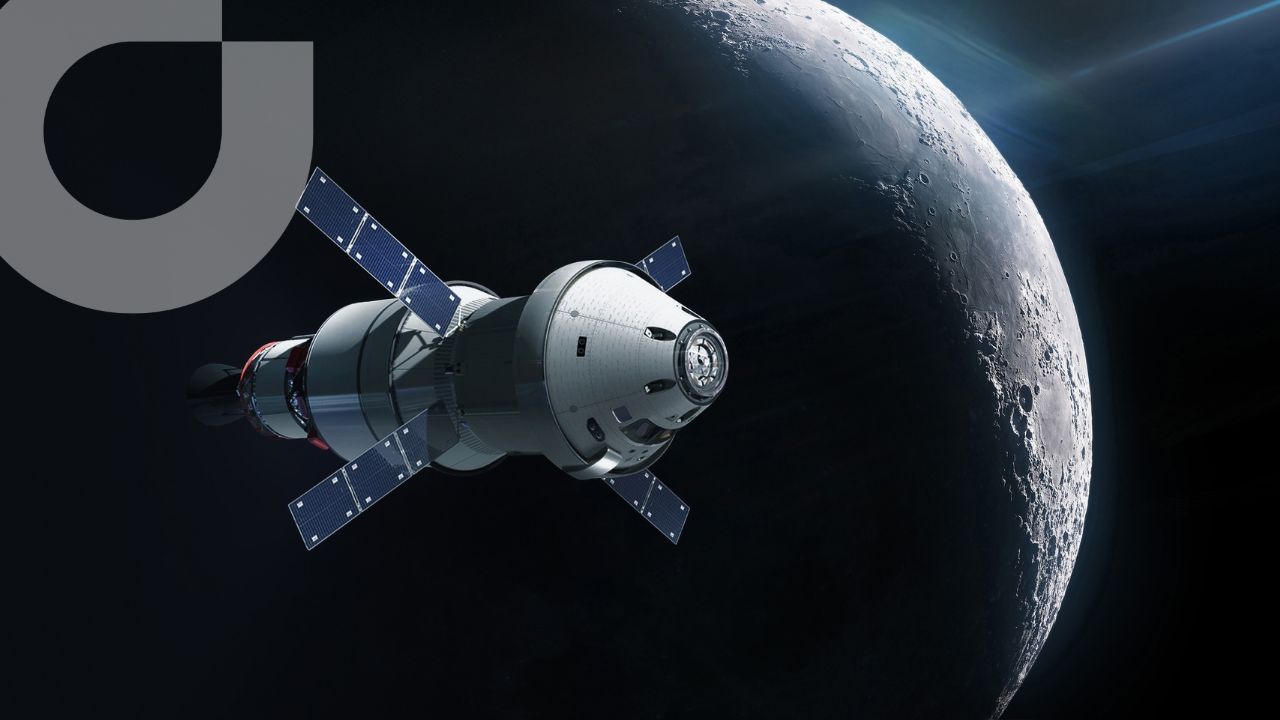
The launch of Artemis II in 2026 demonstrates that when societies define a clear goal, commit to a long‑term horizon, and align public, private, and scientific capabilities, they can still deliver complex outcomes at scale. Beyond space exploration, Artemis offers a critical lesson for Earth: ambition only becomes real when it is organised. This insight is particularly relevant for water.
Historically, water has been treated as a secondary outcome of other agendas—climate, energy, food, health, or urbanisation—when in fact it is the system that connects them all. In a context of geoeconomic fragmentation and strained multilateralism, one reality is unavoidable: no country or company can opt out of water security.
Drawing on Mariana Mazzucato’s distinction between a moonshot and a mission, the water challenge is not about “thinking big”, but about defining a shared objective and building the capabilities, incentives, partnerships, and financial tools required to achieve it. Water does not need more rhetoric about urgency; it needs a mission architecture.
Water security is, by nature, a collective action problem. It cannot be solved in isolation by cities, sectors, companies, or even individual states, because the hydrological cycle does not respect administrative or sectoral boundaries. As highlighted by the Global Commission on the Economics of Water, water must be understood as a global common good, requiring a systemic, economy‑wide response.
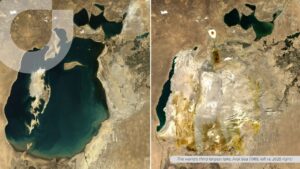
The costs of inaction are severe. By 2050, the global water crisis could put more than half of global food production at risk and reduce global GDP by around 8%, with even greater impacts in lower‑income countries.
A mission‑oriented approach would deliver five key benefits:
- Directionality: turning diffuse concern into clear, measurable goals, such as drought resilience, circular water economies, or zero deaths from unsafe water.
- Coordination: aligning fragmented policies across energy, industry, agriculture, cities, and watersheds around shared outcomes.
- Investment confidence: reducing uncertainty by turning isolated projects into credible long‑term agendas that can mobilise capital.
- Scaling what already works: accelerating the deployment of existing technologies and solutions by integrating regulation, finance, and implementation.
- More pragmatic multilateralism: enabling cooperation based on shared risks and dependencies, even in a fractured geopolitical environment.
Water needs its Artemis moment not as a metaphor, but as a method: a long‑term public purpose translated into mission design. This means prioritising outcomes over announcements, rebuilding state capability, using finance to shape resilient systems, and recognising adaptation not as a defensive cost, but as a platform for innovation, competitiveness, and security.
Artemis also reminds us that humanity’s most ambitious endeavours succeed only when there is collective will—and that they generate profound indirect benefits for human progress. Yet it also confronts us with an uncomfortable paradox. We go to the Moon in search of water, while on Earth we continue to struggle with far more immediate challenges: scarcity, untreated discharges, and the lack of water security affecting daily life across the world. That these problems remain unresolved is not due to a lack of knowledge or technology, but to a lack of ambition to address them with equal determination. Once again, the constraint is not technical—but a failure of will.