It is rare for a nation to question the very geography of its power. Yet, from Tehran to Jakarta, Cairo to Lagos, governments are confronting a truth that was once unthinkable: some of the world’s largest capitals may no longer be sustainable in their current form. The reason lies not in politics or economics alone, but in the invisible foundation on which every city rests: its water security.
As the global water cycle becomes increasingly erratic, cities built for past climates face new limits. For investors and policymakers, this shift is not merely a crisis; it is a generational opportunity to rethink urban resilience, unlock new infrastructure markets, and redefine what “capital investment” really means.
Tehran: The Drying Heart of a Nation
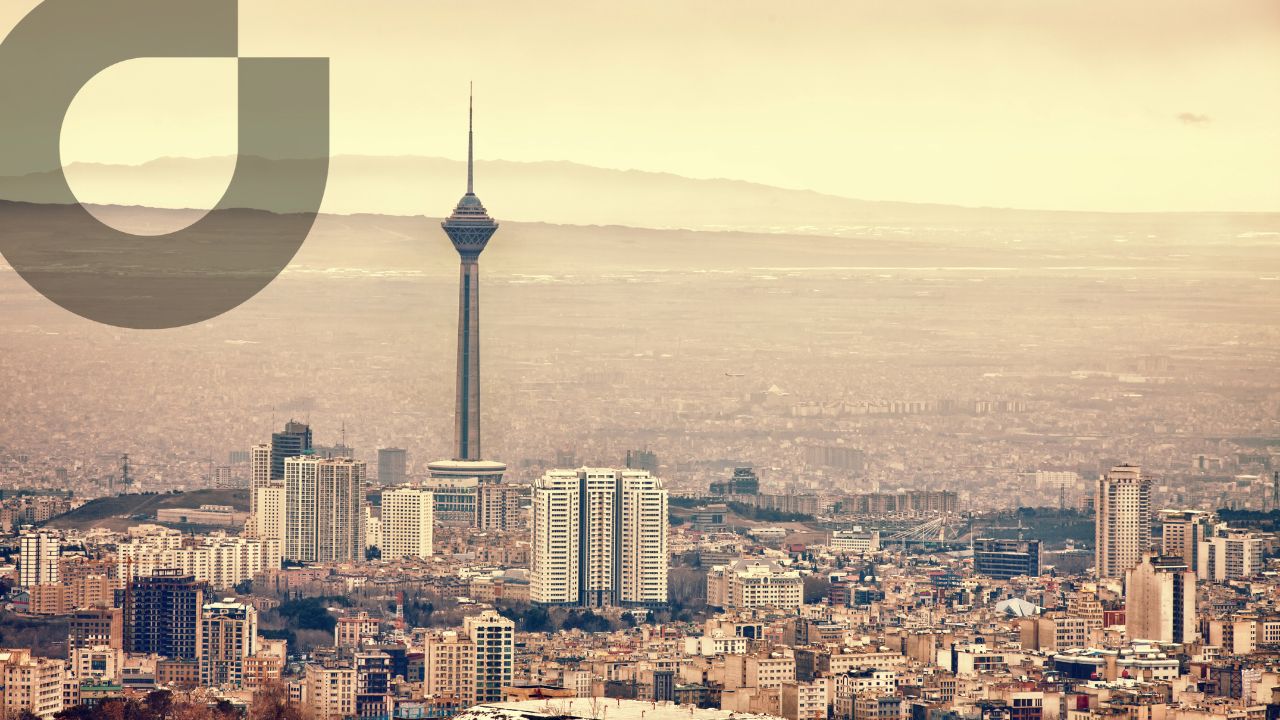
As informed by Financial Times, Iran’s president, Masoud Pezeshkian, recently called for the relocation of the national capital away from Tehran, citing “unsolvable” environmental pressures. His language was blunt because the data are unforgiving.
Tehran’s population of nearly 10 million draws heavily on overexploited aquifers, causing land subsidence of up to 30 centimeters per year in some districts. Rainfall has declined by over 50% compared with historic norms. Groundwater tables have dropped to record lows, and importing water from neighboring basins can cost up to €4 per cubic meter, a prohibitive figure for domestic supply.
The consequences are systemic: sinking land damages roads and pipelines, cracked reservoirs leak essential reserves, and unregulated pumping accelerates the decline. Iran’s planners now face the prospect of a capital city that, quite literally, cannot sustain its own foundations.
Pezeshkian’s proposal to study relocation toward southern coastal provinces, closer to the Gulf, reflects more than desperation. It signals a new way of thinking: that hydrological constraints must guide national strategy. A coastal capital could rely on desalination, wastewater reuse, and trade connectivity: seemingly costly but viable solutions when compared with the compounding cost of inaction.
Jakarta: Too Much Water, Too Little Ground
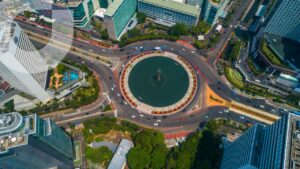
On the other side of Asia, Indonesia’s government has already acted. Jakarta, home to more than 11 million residents, is sinking under the combined weight of overdevelopment and groundwater depletion. Parts of the city subside by up to 25 centimeters per year, while sea-level rise and storm surges threaten to engulf entire neighborhoods.
In response, Indonesia is building Nusantara, a new capital city in East Kalimantan, designed for 2 million inhabitants and conceived as a “forest city” powered by renewable energy and fed by sustainable water systems. The project is monumental in scale and ambition.
While critics rightly note the risks of cost overruns and social displacement, Nusantara also demonstrates the transformational potential of long-term water management. Its blueprint includes integrated catchment systems, rainwater harvesting, and wastewater recycling. For investors, this shift creates demand across multiple sectors: construction, smart metering, flood resilience, and climate-adaptive design.
Jakarta’s crisis is a warning; Nusantara is an experiment in renewal. Together they define a lesson: the economic cost of water mismanagement often exceeds the cost of relocation.
Cairo: Adapting Along the Nile
Egypt’s relocation of ministries and government offices from Cairo to a New Administrative Capital, 45 kilometers east, is driven by congestion and pollution, but also by water stress. The Nile River faces rising demand from agriculture and upstream development, while rainfall remains minimal.
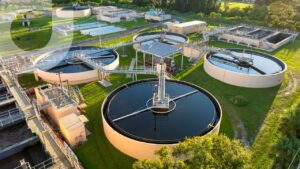
Cairo’s 22 million inhabitants rely almost exclusively on the Nile for drinking water. Any disruption in flow or contamination risks paralysis. The new capital’s planners are investing in wastewater recycling, desalination, and smart irrigation: measures designed not only to conserve water, but also to signal Egypt’s intent to manage its resources through modern technology.
Here lies a vital insight for investors: every water constraint becomes a technology opportunity. From membrane filtration and digital leakage detection to green infrastructure and reuse systems, the water transition is opening investable markets even in challenging regulatory environments.
Lagos and Abuja: Lessons in Relocation
Nigeria faced these decisions half a century ago. In the 1970s, Lagos, plagued by flooding, water contamination, and unmanageable density, prompted the government to establish Abuja as the new national capital. The move succeeded precisely because it aligned urban design, water availability, and spatial planning.
Lagos remains the commercial engine, but Abuja’s location in a more hydrologically stable region has proven strategic. It illustrates that relocating a capital does not drain vitality from the old city; it redistributes pressure and diversifies economic geography.
This model is increasingly relevant for countries like Iran and Indonesia: dual-center systems, where political and administrative functions shift but economic gravity remains diversified, can enhance resilience without total rupture.
Brasília and Beyond: Long-Term Spatial Vision
The archetype of modern capital relocation remains Brasília, inaugurated in 1960. Its purpose was not environmental adaptation but developmental rebalancing: to open Brazil’s interior and relieve pressure on coastal cities. Yet Brasília’s long-term effect was precisely that: it expanded the nation’s spatial capacity, connecting new regions to infrastructure and water management networks.
Today, a similar logic applies under climate stress. Cities like New Delhi, Mexico City, and Cape Town are confronting chronic water challenges: declining groundwater, land subsidence, or recurring droughts. While none plan full relocations, all are experimenting with decentralization, water reuse, and resilience finance. The direction of travel is clear: urban design must adapt to hydrological limits.
The Evidence: A Converging Global Pattern
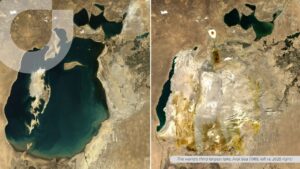
Across continents, the evidence converges. The UN projects that by 2050, more than 2.4 billion people will live in countries facing severe water stress. In the Middle East, per-capita renewable water availability has already fallen below 1,000 cubic meters per year, the recognized scarcity threshold. In Asia’s coastal megacities, subsidence and sea-level rise interact to produce compound risks, eroding infrastructure faster than it can be rebuilt.
The water-security crisis is not episodic but structural. It reshapes real estate markets, public health, and even political stability. Yet it also expands the frontier of what is investable. Where old infrastructure fails, new systems must be built; where aquifers are exhausted, desalination and reuse become indispensable; where cities subside, data and digital tools become critical to monitor, predict, and prevent collapse.
This is not a doomsday narrative. It is the next investment cycle for impact capital, development banks, and private funds seeking both financial return and systemic value.
The Role of Global Water Companies
As the CEO of a company dedicated to advanced water solutions, I see in these crises not collapse but convergence. The boundaries between infrastructure, technology, and finance are blurring. Our role is to make water security investable: to translate environmental urgency into measurable performance and long-term value.
In Tehran, that may mean designing decentralized reuse systems while policymakers debate relocation. In Jakarta, it means supporting flood-mitigation infrastructure around the new capital. In Cairo and Lagos, it means building data frameworks that quantify impact and de-risk financing. Everywhere, it means redefining water not as a constraint but as a catalyst for transformation.