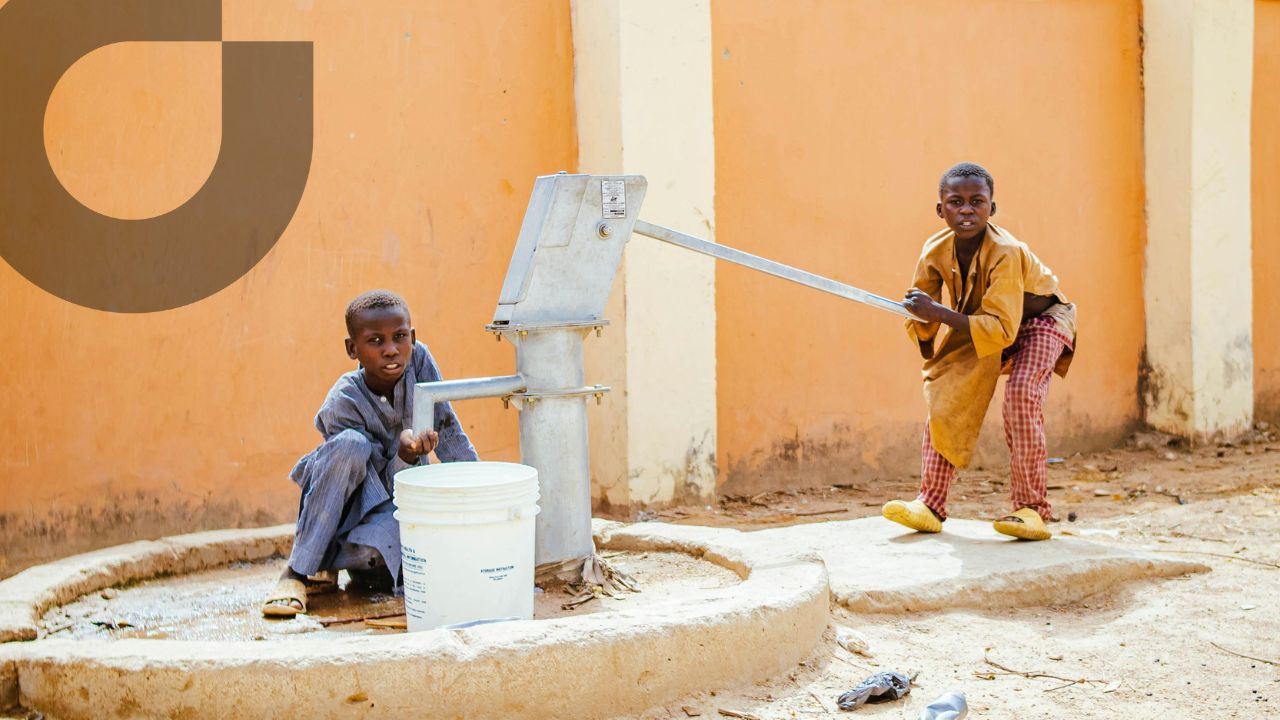
The latest WHO–UNICEF report, Progress on Household Drinking Water and Sanitation 2000–2024: Special Focus on Inequalities, launched at World Water Week 2025 in Stockholm, just a few days ago, casts stark relief on a global failing, I reiterate in different insights on this blog: 2.1 billion people (nearly one in four) remain without access to safely managed drinking water, even as the world progresses toward SDG targets. Further, 3.4 billion lack safely managed sanitation (354 million still practice open defecation), and 1.7 billion reside without basic hygiene services, including 611 million with no facility at all. These are not simply figures worth repeating; they are active deprivations embedded in structural, spatial, and fiscal inequities.
The Hidden Logics Beneath the Numbers
A technical dissection reveals why these deficits persist. First, geospatial disparity remains entrenched: rural communities, fragile states, least-developed countries, and ethnic minorities face disproportionately lower access; in fragile contexts, safely managed drinking water coverage is off by 38% relative to more stable settings. This points to systemic underinvestment where governance capacity is weakest. This definitely seems a curse, not just a problem.
Second, incremental gains mask absolute backlogs: global safely managed water coverage improved from 68% to 74% between 2015 and 2024, translating into 961 million newly served persons, but an enduring 2.1 billion remain without improved access to drinking water. The nuance is that service expansion has been outpaced by demographic growth and underinvestment in operations, maintenance, and resilience. Hardware is essential, but so is software.
Investment Needs: A Quantitative Chasm
Turning to the finance side, multiple recent assessments converge on the magnitude of the shortfall:
- The World Bank estimates that developing countries currently spend US $164.6 billion annually on water sector operations, of which US $131.4–140.8 billion more is required each year, almost tripling current expenditure.
- From a broader vantage, the OECD has posited that achieving SDG 6 may require roughly US $1 trillion per year globally, though granular breakdowns for WASH alone remain sparse.
- org and Water Equity, spotlighted by Time Magazine, estimate that reaching safely managed water and sanitation universality by 2030 demands US $114 billion per year, whereas current flows only amount to US $28.4 billion, yielding a gap of US $85.6 billion annually.
Synthesizing these figures, it becomes clear that closing the gap between millions served and billions denied will require on the order of US $100–140 billion annually in additional investment, at minimum, focused and sustained through 2030.
Service Delivery Versus Resource Management: A Disconnect
Beyond finance, we must unravel the schism between water service delivery (WASH infrastructure, operations, maintenance) and water resources management (basins, allocation, reuse, environmental flows). Frequently, investments in treatment plants, pipelines, and sanitation facilities proceed with scant integration into hydrological planning frameworks. This misalignment strains long-term sustainability: supply systems may be built atop aquifers without understanding recharge dynamics; sanitation discharge may impair downstream ecosystems; and operations may falter when water speed or volume shifts under climate stress.
The SDG 6 targets counsel Integrated Water Resources Management (IWRM): to pursue water-use efficiency, sustainable withdrawals, wastewater treatment, reuse, ecosystem protection, and transboundary cooperation . Yet, in practice, many capital programs remain siloed, often siloed by funding streams and institutional mandates. A narrow focus on delivering taps and toilets neglects watershed health, recharge zones, and climate resilience.
Toward a Systems-Integrated Response
- Align WASH and IWRM in Investment Design
Investments must be planned across both service delivery and resource management. For example, water treatment plants should be co-located with recharge zones; wastewater reuse schemes should be mandated to meet ecosystem and agricultural demands; and service contracts must include allowances for seasonal fluctuations and climate-driven variability.
- Refine Costing Models to Integrate Resource Resilience
Traditional cost estimates focus on capital and O&M, neglecting natural capital dependencies. Revised frameworks must incorporate modeling of aquifer sustainability, ecological thresholds, and climate uncertainties: informing lifecycle costing, risk premiums, and financing instruments like resilience bonds.
- Leverage Blended Finance and Recurrent Funding
Given that private capital focuses on revenue-generating assets, bridging the WASH–IWRM divide calls for blended models: philanthropy and concessional finance can underwrite the natural resource resilience components, while user-fee models support service operations. This was echoed by Water.org’s recommendation for a capital spectrum, from philanthropy to commercial investment .
- Build Institutional Linkages Across Ministries
The current bifurcation of water utilities and water resource agencies inhibits integrated governance. Institutional reform is essential: permit cross-ministry planning, shared budgets, and joint monitoring of both service metrics (e.g., continuity, quality, coverage) and resource metrics (e.g., usage rates, aquifer drawdown, effluent quality).
- Prioritize Equity in Fragile and Rural Contexts
Overcoming the 38% coverage gap in fragile contexts requires targeted capital and operational subsidies. Funds must account for higher per-user costs in dispersed rural systems, and include components for resource protection, such as watershed restoration or recharge enhancement.
Conclusions: Bridging the Divide for Real Impact
“Two Billion Denied” is not a rhetorical framing: it is a technical, financial, and governance indictment. The inequity in water access is rooted not merely in lack of taps or toilets, but in fractured systems, unsustainable planning, and chronic undercapitalization.
The solution is not only about expanding infrastructure: it is about ensuring that infrastructure rests upon resilient hydrological foundations, supported by sustainable resource flows, financed through comprehensive investment strategies, and governed by integrated institutional machinery. The investment equation must reflect not just pipes and pumps, but basins and systems. Closing the financial and structural gap requires us to reject siloed thinking, align WASH with IWRM, and redirect capital where inequity remains embedded.
As CEO of a global advanced water-solutions company, I affirm that engineering solutions must be married to hydrological science, finance must reflect systemic value, and governance must transcend departmental divides. Only then can we turn the denial of water equity into universal, sustainable access, not just for billions more, but for generations to come.