The Middle East stands at a critical tipping point: a region with the highest water stress worldwide, where strategic vision must confront hydrological reality. According to the World Resources Institute’s Aqueduct 4.0, nearly all countries in the Gulf region, including Saudi Arabia, the United Arab Emirates, Qatar, and Bahrain, now face extremely high water stress: more than 80% of renewable water supply is consumed annually. With climate change exacerbating aridity, scarcity is no longer an arcane concern: it is a profound economic and geopolitical imperative for those countries and beyond.
For nations historically anchored in hydrocarbon wealth, this crisis accelerates a broader imperative: diversify economies, enhance food security, realize climate goals, and secure water resilience. Saudi Arabia and the UAE are already advancing avant‑garde strategies: investment in desalination, water reuse, aquifer management, and public‑private governance, framing water as both a resource and a resilience catalyst within national transformation agendas.
The Water‑Geopolitics Nexus in an Arid Arena
Water scarcity in the Middle East isn’t merely environmental: it underpins regional security. Nations share aquifers, rivers, strategic watersheds, and trade routes that asphyxiate when drought intensifies. Food security, urban growth, and industrial expansion all hinge on consistent, affordable freshwater supply. WRI’s data, as above, paints a stark map: population centers, especially along Gulf coastlines and river valleys, endure stress levels historically reserved for desert ecosystems. In this context, water resilience is not merely development; it is strategy.
Saudi Arabia: From Reliance on Fossil Aquifers to PPP‑Driven Innovation
Historically, Saudi Arabia’s water infrastructure comprised heavily subsidized desalination and groundwater withdrawals: fossil aquifers supplying 30% of national water, desalination 60%, and the remaining 10% surface flow. In recent years, Vision 2030’s governance overhaul has restructured the sector: the sweeping 2024 elevation of the Saline Water Conversion Corporation (SWCC) into the Saudi Water Authority (SWA) creates a centralized, empowered regulator overseeing private sector integration and sustainability standards.
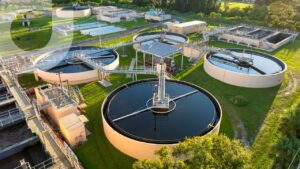
Through entities such as the Saudi Water Partnership Company (SWPC), Riyadh has mobilized over 40 PPPs across desalination, wastewater treatment, and strategic aquifer recharge reserves. These PPPs deploy technologies ranging from cutting‑edge reverse osmosis to digital water‑smart networks – financed, operated, and partially owned by private firms. The ambitious IPO of Miahona, a full‑cycle Saudi water infrastructure company, signals confidence: revenues rose at a 12.3% CAGR, and profit margins improved significantly, paving the way for financial market integration.
Institutionally, SWA’s separation of regulator and operator roles, alongside NWC’s model of outsourcing city distribution while upholding universal pricing, strengthens oversight while protecting citizens from cost shocks. Simultaneously, SWPC attracts international bidders in competitive procurements, supported by shared risk frameworks and local content mandates that integrate private capital without compromising sovereignty.
UAE: From Fossil‑Fuel Dependence to Global Energy‑Water Integration
The UAE has paralleled Saudi ambitions, centralizing PPP under Federal Decree‑Law No. 12/2023. Its flagship utility ADWEA (now TAQA) operates 85% of power and 90% of freshwater infrastructure through PPP models, enabling state‑of‑the‑art desalination funded by investor partnerships.
Among its most advanced projects is ACWA Power’s Taweelah and Hassyan IWPs: the former is the world’s largest reverse‑osmosis desal plant, producing 909,000 m³/day and running at 90% capacity. The latter, in Dubai, sets record‑low water tariffs (US $0.365/m³), powered partially by solar energy in a breakthrough green‑energy‑coupled model. These projects demonstrate scalability, low‑carbon pathways, and cost‑efficiency, all essential tools for climate mitigation and economic diversification.
Sustainable Development & Economic Diversification: Water as a Catalyst
Under the Saudi Vision 2030 framework, water sector reform dovetails with national objectives: urban growth in Riyadh, megaprojects like NEOM, food security, and tourism (Red Sea Development) hinge on reliable, low‑carbon water supply. UAE’s Abu Dhabi Plan 2030 similarly integrates water‑energy‑food resilience into its environmental and industrial policies.
By employing desalination, treatment, and reuse, these nations reduce agricultural groundwater depletion and transition arid lands towards sustainable agriculture and food processing. Virtual water trade and wastewater-driven urban greening illustrate how resource circularity is inspiring new service sectors, agri-tech clusters, and environmental tourism: all underpinned by sophisticated governance and PPP investment.
Institutional Synergy and Public‑Private Collaboration
What sets KSA and UAE apart is their capacity to translate institutional ambition into delivery:
- Saudi Water Authority (2024) consolidates regulation, licensing, and standards under a single mandate.
- SWPC operates transparent bidding structures, attracting global capital ($12 billion PPP pipeline), promoting risk-sharing and innovation.
- NWC’s management contracts out city water services while securing universal tariff policies and local workforce development .
- In the UAE, Federal PPP law and TAQA’s regulated framework create stable investment environments, combining sovereign guarantees with market rigour.
These innovations de-risk large-scale infrastructure, ensure technology transfer, and align private returns with sovereign sustainability goals.
Navigating Geopolitical Tensions Through Water Innovation
Water scarcity exacerbates tensions across transboundary aquifers, refugee flows, and climate-driven migrations. The Gulf’s water solutions: PPP-backed desalination, strategic reserves, and reuse networks—provide buffers that prevent scarcity from cascading into state fragility.
Increased regional coordination, such as the Saudi‑Emirati Coordination Council (est. 2016), has enabled joint investments, knowledge exchange, and policy harmonization on resource management. These integrated mechanisms position water projects not merely as engineering feats, but as instruments of foreign policy and regional diplomacy.
Charting the Path Forward: A Global Blueprint
After years working in the Middle East, I would like to highlight some key lessons as many people acknowledge that the Middle East’s water sector is becoming the crucible for 21st‑century resilience. It all suggests success depends on:
- Data‑driven planning: leveraging to identify hotspots, model supply volatility, and prioritize interventions.
- Institutional reform: separating regulator and operator, enabling transparent PPP governance, ensuring stakeholder accountability.
- Technology integration: coupling renewables with desalination, deploying smart networks, pursuing managed aquifer recharge.
- Socio‑economic integration: embedding water‑related PPPs within broader economic diversification, workforce upskilling, and environmental stewardship.
- Regional diplomacy: using water resilience as a foundation for cooperation, reducing conflict potential, and strengthening shared security.
From Crisis to Opportunity
Middle Eastern nations face a stark hydrological dilemma: a region that already consumes 80–90% of its renewable water must now triple down on innovation and governance. But this crisis catalyzes opportunity, transforming water from a vulnerability into a vector for sustainable development, economic diversification, and geopolitical stability.
Saudi Arabia’s creation of the SWA, its deployment of over 40 PPPs, and the public listing of infrastructure firms exemplify a transformative model. The UAE’s solar‑backed, record‑cheap desalination projects demonstrate how public‑private ambition, coupled with legal innovation, can reshape resource economies.
We are witnessing the birth of a new water economy, one aligned with global climate goals, national visions, and regional resilience. It is an economy where private capital accelerates adaptation, where sustainability and profitability converge rather than clashing, and where water becomes the keystone of a diversified, secure future.
A final reflection
In the initial stages, particularly between 2016 and 2018, there was a strong call for investors, developers, and construction companies to actively support these programmes with great enthusiasm. Over time, however, market sentiment has evolved towards a more cautious and measured approach.
The model has required stakeholders to assume considerable construction risks and to commit to strict, long-term contractual frameworks. This has occasionally led to highly competitive bidding environments, with a strong focus on lowering tariffs, delivering clear benefits to citizens, but placing the majority of the risk on the companies responsible for implementation.
Understandably, this has gradually reduced the appeal of the model for both investors and construction firms, many of whom now find more balanced risk-return profiles in alternative markets. In some instances, the growing role of companies supported by sovereign wealth funds has reshaped the competitive landscape. For example, the evolution of ACWA Power, now a flagship entity backed by the Public Investment Fund (PIF), illustrates how strategic national support has been mobilised to sustain key players in both renewable energy and water sectors.
Looking ahead, it may be worth considering that, while this model can continue to play an important role within local strategies such as Vision 2030, its long-term scalability in international markets might appear increasingly limited, in the absence of new actions. In fact, in some cases, direct funding through public channels might prove more effective than continued reliance on international private sector participation, which has shown signs of decreasing appetite.
Beyond the financial structure, it is also essential to reflect on the broader implications of prioritising low-cost water. When water is valued solely by its price, rather than its strategic importance, there is a risk of underestimating its true value. Without a rational shift in this paradigm, the long-term feasibility of the model may remain uncertain, and scarce water resources are likely to be channelled towards investment opportunities that offer more favourable risk-return profiles.