As climate volatility intensifies, the once-reliable assumptions that underpinned water infrastructure design are eroding. The global water sector stands at a critical inflection point: existing systems (often centralized, rigid, and aging) are often increasingly inadequate in the face of rising climate extremes, urban growth, and complex hydrological shifts. To navigate this new reality, we must fundamentally rethink the way we conceive, build, and manage water infrastructure. The future seems to lie in complementing conventional infrastructures with modular, adaptive, and climate-resilient systems that not only withstand disruption but actively enhance our capacity to thrive amid uncertainty.
The stakes are high. According to the World Bank, climate-related water stress could reduce GDP in some regions, namely the Middle East, by up to 6% by 2050. In the United States alone, the American Society of Civil Engineers (ASCE) estimates that over $1 trillion in investment is needed through 2040 to modernize the nation’s water systems. Yet, this challenge presents a historic opportunity. By embedding resilience and adaptability at the core of infrastructure planning, we can simultaneously address immediate risks and unlock long-term value for communities, ecosystems, and economies.
The Modular Turn: Designing for Uncertainty
Traditional water infrastructure was built for predictability: large-scale dams, treatment plants, and pipelines designed for average conditions and long planning horizons. Today, such static systems somehow face growing limitations. Climate change has rendered the notion of “average” obsolete. What we now require are infrastructures that can be deployed faster, scaled incrementally, and reconfigured in response to dynamic conditions.
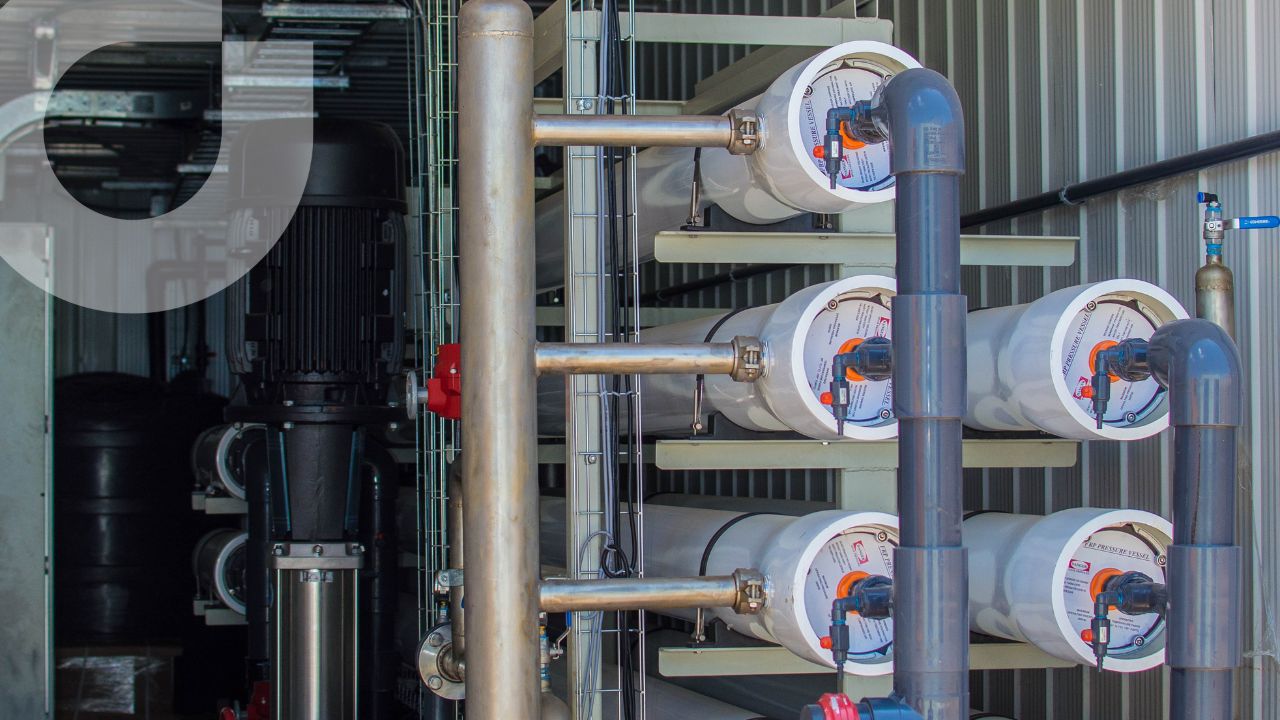
Modular water systems represent a paradigm shift. Prefabricated and transportable treatment units, decentralized desalination plants, and mobile wastewater recovery facilities offer unprecedented flexibility. They allow communities to respond to localized shocks, whether floods, droughts, or contamination events, without relying solely on sometimes distant, centralized infrastructure. These systems also support equitable access in underserved or remote areas, bypassing the need for costly and time-consuming capital-intensive builds.
For instance, in California’s Central Valley, modular reverse osmosis units are helping small agricultural towns treat nitrate-contaminated groundwater. In sub-Saharan Africa, containerized solar-powered filtration units are supplying clean water in refugee settlements and off-grid villages. These examples underscore a broader truth: modularity is not just a technical solution, but a strategic one: empowering rapid deployment and resilience in the face of fluctuations.
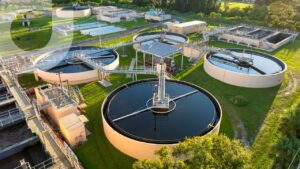
Yet, while modular and decentralized systems offer critical flexibility, centralized infrastructure continues to play an indispensable role in delivering scale, reliability, and economic efficiency; particularly in dense urban environments or for large-scale water reuse and stormwater management. The challenge is not to choose between centralized and decentralized models, but to design interoperable systems that combine their strengths. A resilient future hinges on hybrid architectures where core networks are reinforced by adaptive, distributed nodes, thus creating a layered defense against disruption and enabling more responsive, community-centered water management. The most rational course of action is to strengthen the existing, outdated and deficient infrastructure, complemented by modular auxiliary systems that confer enhanced flexibility upon the overall model.
Building Infrastructure for Climate Resilience
Beyond adapting to climate change, water infrastructure must also contribute to broader climate resilience. This requires a reorientation of investment priorities. Instead of simply upgrading pipes and pumps, we must invest in hybrid solutions that integrate grey, green, and digital infrastructure.
Nature-based solutions such as constructed wetlands, riparian buffers, and green roofs help manage stormwater, recharge aquifers, and mitigate urban heat; all while providing biodiversity and recreational co-benefits. At the same time, smart water systems, powered by real-time sensors and AI-driven analytics, enable predictive maintenance, optimize water distribution, and reduce energy consumption. These integrated approaches lower emissions and improve system performance.
The economic case for resilience is clear. A 2021 report by the Global Commission on Adaptation found that every dollar invested in climate-resilient infrastructure yields $4 in benefits. Moreover, resilient infrastructure attracts private capital by lowering risk exposure and ensuring long-term service continuity. Institutional investors, multilateral development banks, and climate funds are increasingly aligning their portfolios with assets that offer both environmental and financial returns.
Embedding Resilience into Governance and Finance
Technical innovation alone is insufficient. To scale resilient infrastructure, we must also modernize the governance frameworks and financing mechanisms that support them. This includes revising procurement practices, embracing performance-based contracts, and fostering multi-stakeholder collaboration across utilities, regulators, and communities.
Public-private partnerships (PPPs) are playing a crucial role in mobilizing resources and accelerating delivery. However, PPPs must evolve to value resilience explicitly. This means incorporating climate risk assessments into project design, mandating resilience metrics in tenders, and enabling adaptive management through contractual flexibility.
Equally important is the mobilization of blended finance: combining public funds, philanthropic capital, and private investment to de-risk innovative projects. The emergence of resilience bonds, outcome-based financing, and ESG-linked infrastructure funds signals a growing appetite for sustainable investment vehicles.
From Infrastructure to Intelligence
Rethinking water infrastructure is not merely an engineering challenge: it is a leadership imperative. As CEOs, we must champion a new vision where water systems are not just assets, but adaptive platforms for resilience, inclusion, and innovation.
The pathway from risk to resilience is not linear. It demands experimentation, learning, and long-term commitment. Yet the benefits are profound: societies that can manage water wisely under climate stress are more stable, more prosperous, and better equipped to navigate the turbulence ahead.
In this age of climate volatility, the infrastructure we build will shape the futures we can imagine. Let us ensure they are resilient, interoperable, and ready for the challenges to come.