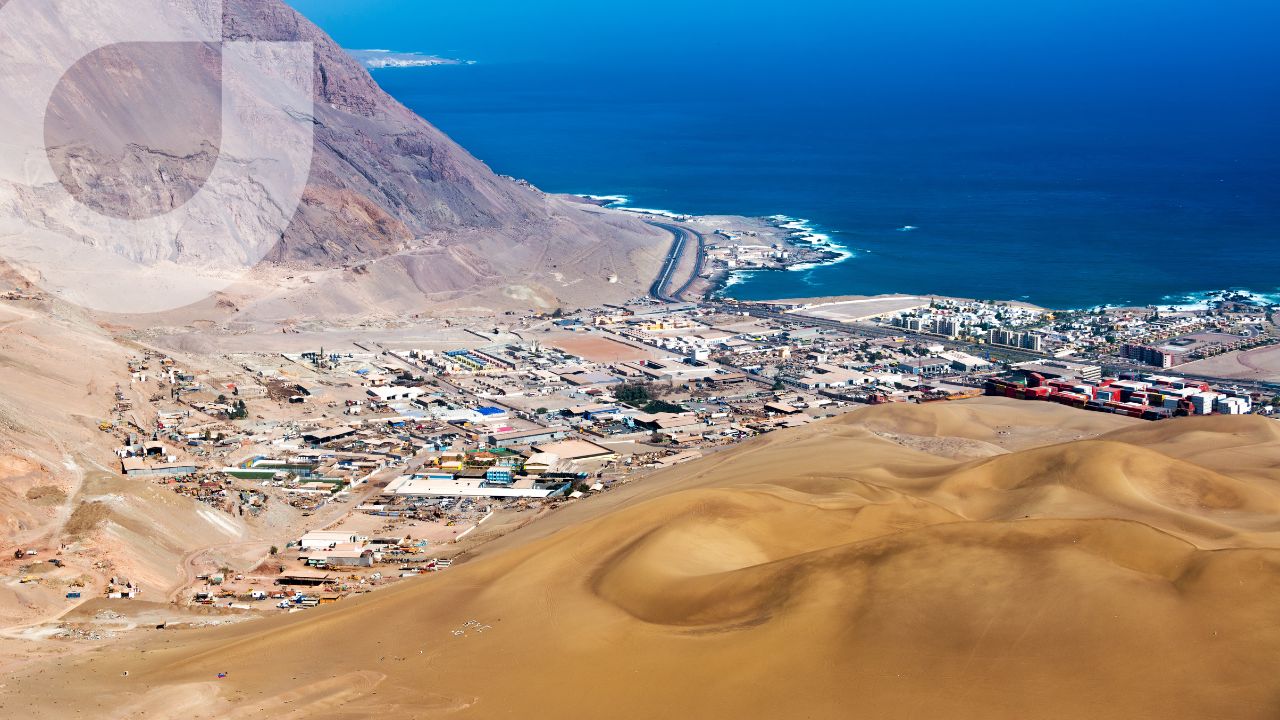
Few countries combine such extraordinary geographic asymmetry with such water-intensive economic activity as Chile. Mining is concentrated in the hyper-arid north; high-value agriculture depends heavily on irrigation through the central regions; most of the population and economic activity are concentrated in the country’s middle third; and the Pacific Ocean provides an effectively unlimited (yet energetically expensive) potential source of new water.
For decades, Chile was also an international reference case for another reason: it went further than almost any country in treating water as an economic resource, establishing transferable water-use rights and allowing markets to play an important role in reallocating them.
Today, the interesting question is no longer whether water should have an economic value. Chile largely settled that debate decades ago. The question is whether markets, regulation and infrastructure can together put a value on something much more complicated: water security.
That distinction matters because Chile is entering an unusual moment. Hydrologically, 2026 has been remarkably favorable. The Dirección General de Aguas’ September forecast estimates average water availability from snowmelt at 82% above the previous season. Storage across the 25 reservoirs monitored nationally was 31.2% higher against August 2025 levels, while 14 reservoirs exceeded 80% of capacity, versus nine a year earlier.
Yet the authorities explicitly say there is still insufficient evidence to declare the megadrought that began in 2010 over.
This apparent contradiction captures the new economics of Chilean water. A wet year is a hydrological event. Water security is a long-term condition.
Beyond the water market
Chile’s remarkable institutional innovation was to separate water rights from land ownership and make those rights tradable. That created economic signals around scarcity and allowed water to migrate toward higher-value uses.
But the experience of the megadrought exposed the limitations of treating allocation as the central problem.
A market can redistribute a scarce resource; it cannot necessarily create additional water, recharge an aquifer, build a reservoir, interconnect systems, restore a watershed or anticipate the social cost of a catastrophic shortage. Nor does the market price of an individual water right automatically capture the option value of resilience twenty years into the future.
The 2022 reform of the Water Code reflected this evolution. Water now has explicitly recognized subsistence, ecosystem and productive functions, with human consumption, domestic subsistence and sanitation receiving priority. New water-use concessions are generally granted for 30 years and can be renewed, subject to conditions including effective use and source sustainability.
That represents an important philosophical evolution. Chile has not eliminated economic allocation. It has embedded it within a broader concept of public interest, ecological sustainability and basin security.
The next step is even more demanding: moving from allocating existing water more efficiently to expanding the frontier of reliable water itself.
Mining is already showing what that transition looks like
The transformation is clearest in copper.
In 2025, Chilean copper mining used 8.11 cubic meters per second of seawater, 4.6% more than in 2024 and 231% more than in 2016. Seawater already represented 36.8% of the sector’s external water supply. Meanwhile, continental-water extraction fell 7%, to 13.94 m³/s.
But perhaps the most revealing number is 72.5%. That is the share of total mining water use represented by recovered and recirculated flows. Mining operations recovered or recirculated 58.17 m³/s in 2025: more than four times their continental-water abstraction.
This is effectively a new industrial water model: use less freshwater per unit of production, circulate water repeatedly within the industrial process and manufacture additional supply from the ocean when and if necessary.
Desalination is central to that model. Of the seawater used by copper mining in 2025, 70.4%, or 5.71 m³/s, had been desalinated.
That has profound consequences. In economic terms, desalination changes the water constraint from an absolute physical constraint into something closer to an infrastructure-and-energy constraint. Water from the Pacific is abundant. The questions become how much it costs to treat, transport and pump it… and who pays.
For mines located at high altitude, the second part can be as important as desalination itself. Pumping desalinated water from the Pacific to operations thousands of meters above sea level makes power a significant component of the marginal cost of water.
The water-energy nexus therefore becomes central to the economics of Chilean copper.
Agriculture faces a different equation
What works for a copper mine cannot simply be replicated across agriculture.
A high-margin mining operation can absorb the capital and energy costs of moving desalinated seawater hundreds of kilometers and potentially thousands of meters vertically. Many agricultural activities cannot.
That makes productivity per cubic meter increasingly important.
Agriculture’s challenge is consequently not simply to find additional supply. It is to extract greater economic value from each unit of water while improving storage, conveyance, irrigation efficiency and aquifer sustainability.
Infrastructure remains fundamental. In 2026, for example, construction advanced on the approximately US$158 million Zapallar reservoir in Ñuble, designed to store 80 million cubic meters and potentially irrigate around 10,000 hectares, benefiting more than 2,000 agricultural producers.
But Chile should be careful not to interpret water security as synonymous with building reservoirs.
Storage is one instrument. Precision irrigation, reductions in conveyance losses, groundwater management, wastewater reuse, managed aquifer recharge, changes in cropping patterns and better hydrological information belong to the same economic equation.
Indeed, climate change makes the distinction between water availability and reliable water availability increasingly important. An agricultural system optimized around historical averages can become economically fragile when precipitation becomes more variable even if long-run average volumes do not collapse proportionately.
From sectors to basins
This is why perhaps the most consequential institutional change underway in Chile receives less attention than desalination.
Water is fundamentally a basin-level system, while investment decisions are usually made sector by sector. That sectoral bias is quite evident in Chile.
A mine optimizes its supply for mineral washing, cooling and dust supression. An irrigation district optimizes its allocation. A utility secures drinking water for citizens. A hydropower operator manages storage and flushing flows. Industry manages process water. Environmental regulation protects ecosystems. Yet all may interact with the same hydrological system, in a country where integrated river basin management still shows significant leeway for improvement.
Chile is now developing Strategic Water Resources Roundtables and basin-level Strategic Water Resources Plans. During 2026, this process has been advancing across 22 prioritized basins, from the Salar de Atacama and Copiapó to Maipo, Rapel, Biobío, Toltén and the far south.
This could prove more important than it sounds. The frontier in water governance is not merely better regulation of individual users. It is optimization of the entire basin: surface water and groundwater, human and productive demand, ecological flows, storage, reuse and alternative supply.
That requires better measurement. It also requires accepting that the economically cheapest source for one user may not be the economically optimal solution for the system.
Chile is beginning to manufacture water
The Pacific adds another dimension.
Chile enacted Law 21.813 in May 2026, establishing a dedicated legal framework for seawater desalination. At the same time, desalination is moving beyond mining into multipurpose territorial infrastructure.
The Coquimbo desalination project awarded in 2026 is designed for 1,200 liters per second, initially operating at 800 l/s, with estimated investment of approximately US$318 million. Significantly, its output is conceived not only around drinking-water security but also within a broader multipurpose approach.
That points toward a potentially much larger market.
Chile has traditionally allocated naturally available water. Increasingly, it will also produce reliable water through infrastructure.
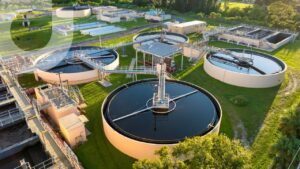
Once desalinated water, reused wastewater, captured stormwater and managed groundwater recharge become material components of supply, the economics change. Water security becomes partly a manufactured service requiring long-duration capital, energy, pipelines, treatment technology and contractual certainty.
This is where private investment can make an enormous contribution.
But capital requires bankability. A desalination plant, reuse system or major conveyance infrastructure with a 25- or 30-year economic life cannot depend on emergency procurement during the next drought. Investors need predictable permitting, allocation rules, long-term offtake structures, credible tariffs or user payments and clarity about how infrastructure serving several sectors will be remunerated.
Chile already has useful institutional experience here. Its urban water industry demonstrates that private territorial monopolies can coexist with demanding economic regulation, predominantly tariff-financed capital expenditure and targeted social subsidies. The sophisticated empresa modelo (model company) regime attempts to reproduce competitive discipline by benchmarking operators against a hypothetical efficient utility rather than simply reimbursing their historical costs. It is a form of yardstick regulation in which tariffs are derived from the costs of a hypothetical efficient operator rather than simply passed through from the incumbent.
The lesson extends beyond water and sanitation: well-designed economic regulation can turn long-lived water infrastructure into an investable proposition while protecting users from monopoly rents.
The harder question is how to adapt that logic to assets whose benefits cross sectors and whose principal economic output may be resilience rather than additional consumption.
Pricing the water we may not need—until we do
This may be Chile’s most sophisticated regulatory challenge.
Traditional infrastructure economics works relatively well when additional capital produces measurable additional output. Resilience infrastructure is different. A redundant pipeline, strategic reservoir, alternative source, or spare treatment capacity may appear economically inefficient during normal conditions.
Its value becomes enormous when the primary system fails.
In that sense, water resilience resembles insurance. The economically efficient level of investment cannot be determined simply by minimizing the cost of supplying today’s cubic meter. It must incorporate the expected cost of shortages, production losses, agricultural disruption, emergency supply, and environmental damage under low-probability but increasingly plausible hydrological events.
That requires regulation capable of remunerating optionality.
Chile’s first Water Resources Climate Change Adaptation Plan, adopted in 2026, moves in this direction. Its 10 measures and 35 actions address human supply, ecosystems, sustainable productive activity, information, and resilience to extreme events. Meanwhile, the National Public Infrastructure Plan 2025–2055 identifies more than 7,200 water-security projects representing over CLP45 trillion of potential long-term investment.
The figure should not be confused with committed expenditure. But its scale reveals the magnitude of the transition.
A second water revolution
Chile’s first water revolution was fundamentally about allocation. It created property rights, economic signals and institutions capable of directing a scarce natural resource among competing uses. Its regulated urban water model later showed how private capital, economic regulation, and social policy could finance near-universal infrastructure.
The “second revolution” is different.
It is about making supply more resilient, reducing demand per unit of economic output, circulating the same water repeatedly, developing alternative sources and managing increasingly volatile hydrology at basin level.
Mining is already demonstrating one version of that future through seawater, desalination and recirculation. Agriculture will require a different combination of storage, irrigation productivity, groundwater sustainability and infrastructure. Cities and industry will increasingly need reuse, diversification and redundancy. And all of them ultimately interact within the same basins.
The challenge for Chile is therefore not to choose between markets and planning, or between public and private investment. It is to construct institutions in which scarcity signals, basin-level planning, environmental constraints and private capital reinforce rather than contradict one another.
The extraordinary irony of 2026 is instructive: Chile is accelerating this transformation in one of its best hydrological years in recent memory. That is precisely when it should.
The real test of a sophisticated water economy is not how it allocates scarcity when reservoirs are empty. It is whether it has the institutional discipline to invest in the next drought while they are full.